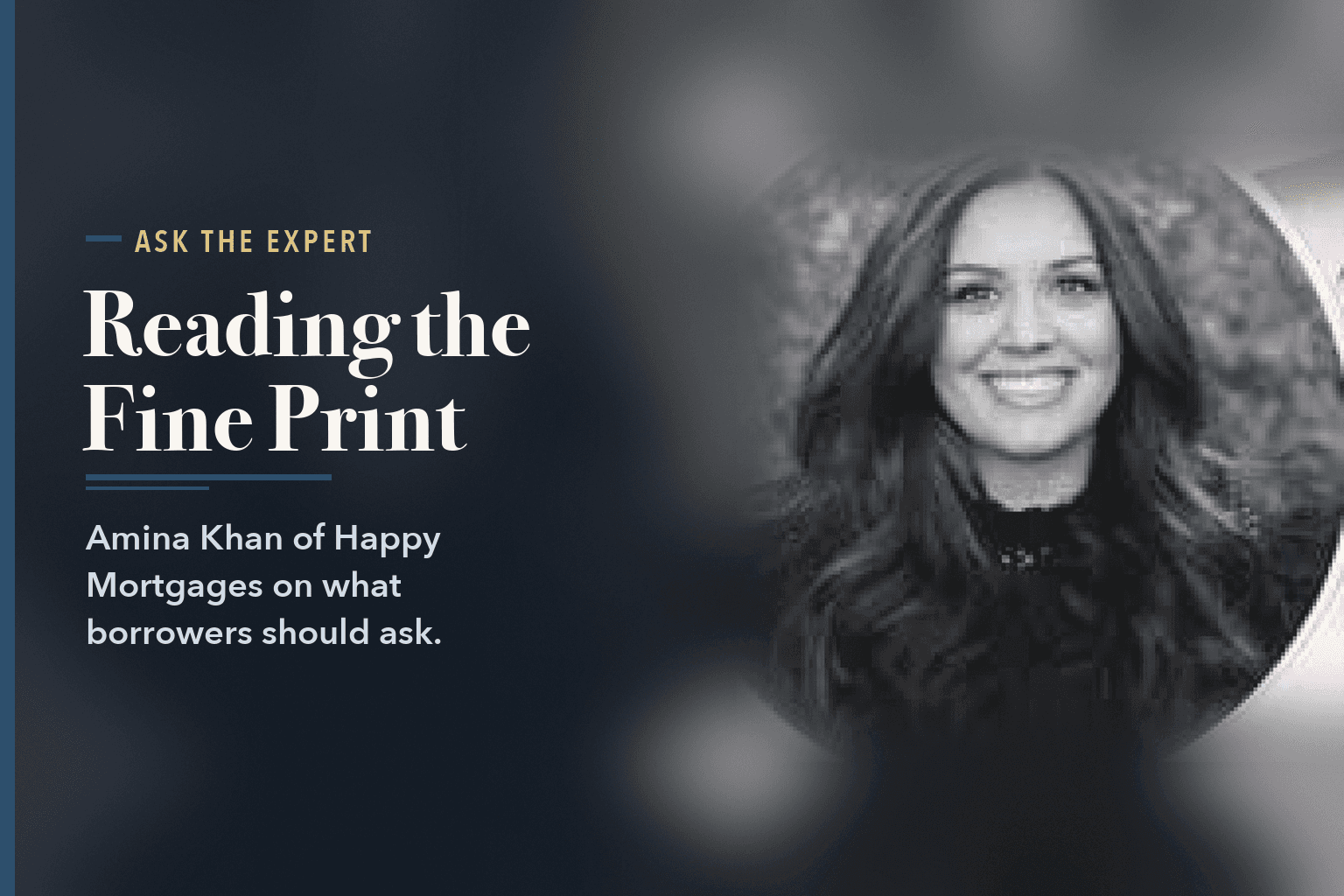
Every lender says it can close fast. Amina Khan would rather talk about whether it can close yours.
Amina Khan, the founder of Happy Mortgages, says two buyers with similarly priced homes, comparable incomes and excellent credit can qualify for entirely different loans, and borrowers deserve to know why. Mortgage education, she argues, should begin somewhere between the impressive headline and the fine print. She also created the Happy Mortgages Library, an educational platform meant to make lending more understandable.
The problem with promising perfection
Mortgage advertising is designed to attract attention, Khan writes, and that is understandable, since businesses need customers. But a mortgage is not an interchangeable product on a shelf. "A mortgage shouldn't be sold as a quick dopamine hit," she writes. It is a long-term financial commitment.
Two people can buy similarly priced homes, have comparable incomes and excellent credit scores and still qualify for entirely different financing. How you earn your income matters, and so does how you document it. So do what you own, what you owe, where your money comes from and what you are buying. Even the property has a story to tell.
"Can we close quickly? Absolutely. Can we close your mortgage quickly? That's a different question," she writes.
What experience teaches
Khan entered the mortgage industry in 2015 and spent about seven years in retail lending and operations before moving into the broker world. Over that time, she writes, she has had a front-row seat to more than 6,000 closings, including builder transactions that require coordination across multiple parties, construction timelines and contracts.
What looks straightforward at the start does not always stay that way, and what looks impossible is not always impossible. Sometimes the answer is a different loan program, restructuring debt, documenting income differently, addressing a property concern or simply more time. Sometimes the responsible answer is that the financing does not make sense right now. "You cannot responsibly recommend a solution to a problem you haven't properly identified," she writes.
Information is not education
Rates, calculators, affordability estimates and prequalification tools are everywhere. None of them is inherently bad, Khan writes, but none is a substitute for understanding. A calculator does not know whether self-employment income is calculated differently from taxable income. A rate ad does not necessarily explain the costs, assumptions or qualifications behind the rate. A quick prequalification, an early estimate of what a lender might approve, does not mean every part of the transaction has been evaluated.
"As a society, we've been programmed to spend months planning a wedding that lasts a day, yet sometimes devote less time to understanding a mortgage that could last 30 years," she writes.
Investigate, educate, recommend
Her philosophy at Happy Mortgages comes in three steps: "Investigate first. Educate throughout. Recommend responsibly." She is particularly interested in files that need a deeper look: self-employed borrowers, real estate investors, complicated financial histories and deals that do not fit a conventional lending conversation. A first-time buyer, she adds, deserves the same investigation as an investor buying a fifth property.
Her suggested first question for any lender: "How much do they actually understand about the mortgage they're promising you?"
Happy Mortgages is on Instagram at @happy.mortgages.with.amina and can be reached by call or text at 704.737.4567.
This story appears in the November 2026 issue of Stroll Providence, which you can read or download in full.