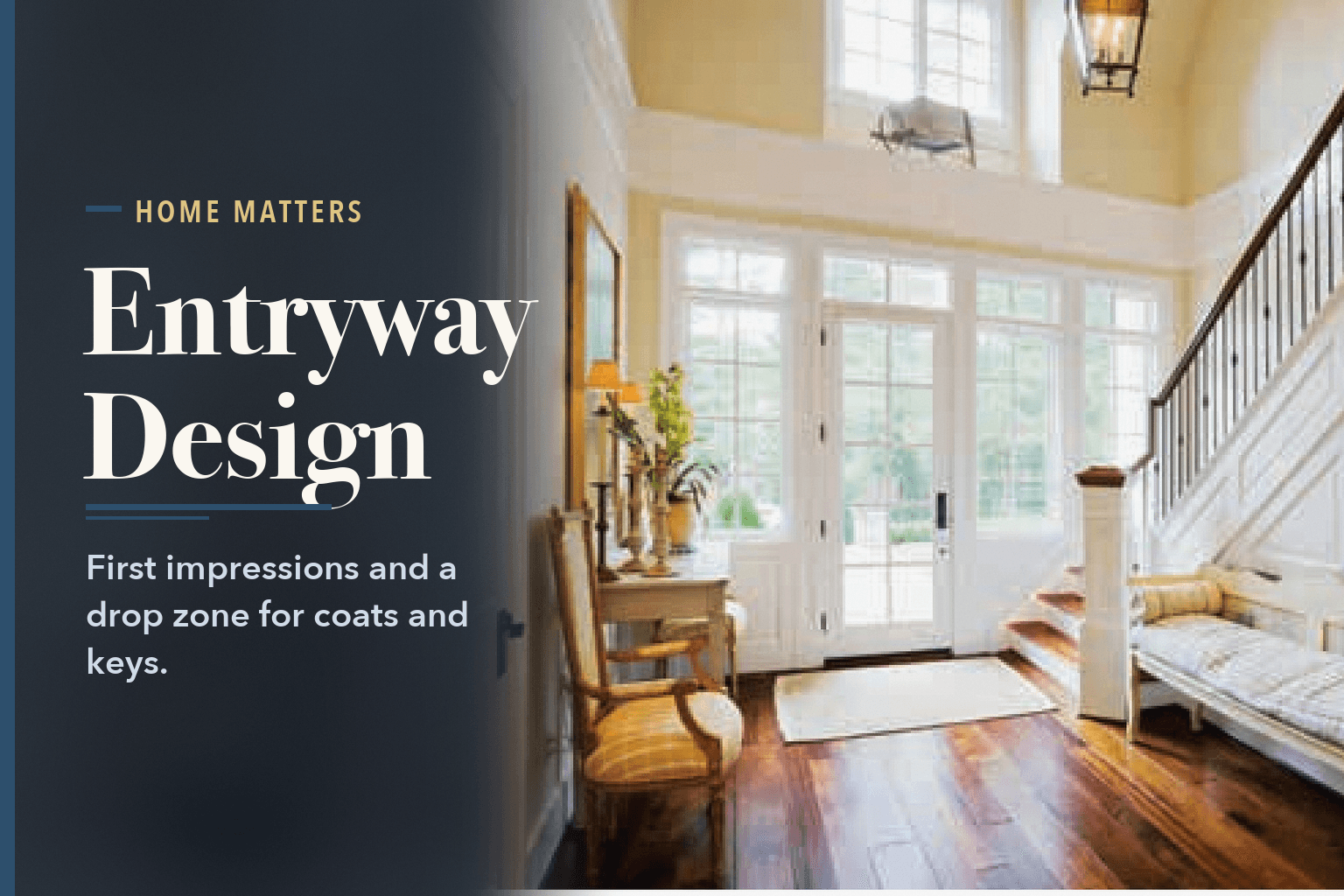
Entryways are small, and they do a lot of work.
An entryway is the first impression for guests, the daily drop zone for coats and keys and the opening note of the design story the rest of the home tells. The best ones do all of it, offering a beautiful first look and practical storage without the two jobs fighting each other.
A low-risk place to be bold
The entryway is a natural spot for a bold design choice. A statement wallpaper, paint color or rug can set the tone for the rest of the house. An oversized mirror adds visual depth and a practical last glance on the way out the door.
Layered lighting, such as a ceiling pendant, sconces or lamps on a nearby console, adds warmth and signals that the small space was designed on purpose. A large piece of art, or even a smattering of family photos, greets visitors with personality.
Storage is the backbone
A functional entryway starts with storage. A bench with built-in cubbies, wall hooks at varying heights or a slim console with drawers gives coats, bags and keys a designated home.
Because entryways absorb daily wear, from muddy shoes to dripping umbrellas, durable materials matter more here than almost anywhere else in the house. Stone or tile flooring, rugs made of wool or indoor-outdoor material and scuff-resistant paint all hold up better than delicate finishes. Umbrella holders, baskets and trays for smaller items like mail and sunglasses round out the space, keeping it tidy without giving up practicality.
The result is an entry that looks designed and works every day, which is the whole job.
This story appears in the October 2026 issue of Stroll Providence.