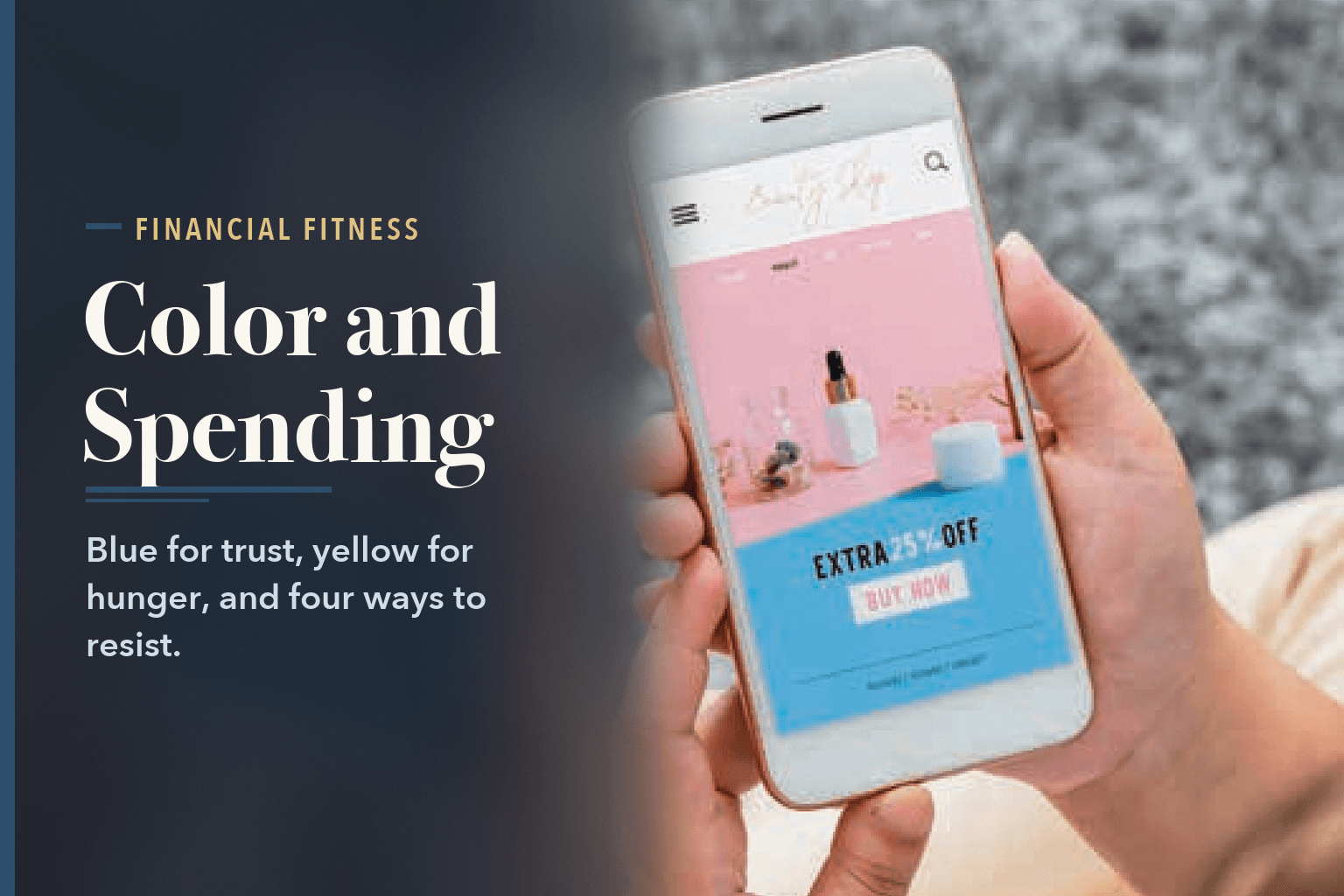
Before you read a single number on a price tag, color is already at work.
Retailers use color to trigger purchasing. Financial technology companies favor blue and green, colors associated with trust and growth. Fast food leans into yellow to stimulate hunger. The core insight is that color can slip past logical financial decision-making and set off an emotional response instead.
Knowing the psychology behind those choices can make you a more intentional spender, a smarter saver and a more confident navigator of a marketplace designed to influence you at every turn.
The eye leads the wallet
The number on the tag is rarely what gets an item noticed. Retailers have long understood that the eye leads the wallet, and they work behind the scenes to trigger quick spending. A shopper who meant to browse can end up at checkout without being sure how it happened. The faster a store captures your attention, the quicker you move.
Four habits
A few practical habits keep color from steering your spending.
Shop with a list written down before you walk into a store or open an app. A concrete plan makes it harder for environmental cues to pull you off course.
When a purchase feels urgent, pause and ask whether the urgency is real or manufactured.
Give yourself a cooling-off window before committing to unplanned spending.
When browsing online, switch your device to grayscale mode. It is less pleasant to look at, but removing color from the equation can make it surprisingly easier to judge a purchase on its merits alone.
The yellow effect
The next time you are tempted to eat out instead of cooking at home, consider what color is doing to get you to part with your money. Is it the yellow effect? Color is not going anywhere, and neither are the marketers who use it. Think about hues, and shop informed.
This story appears in the September 2026 issue of Stroll Providence.