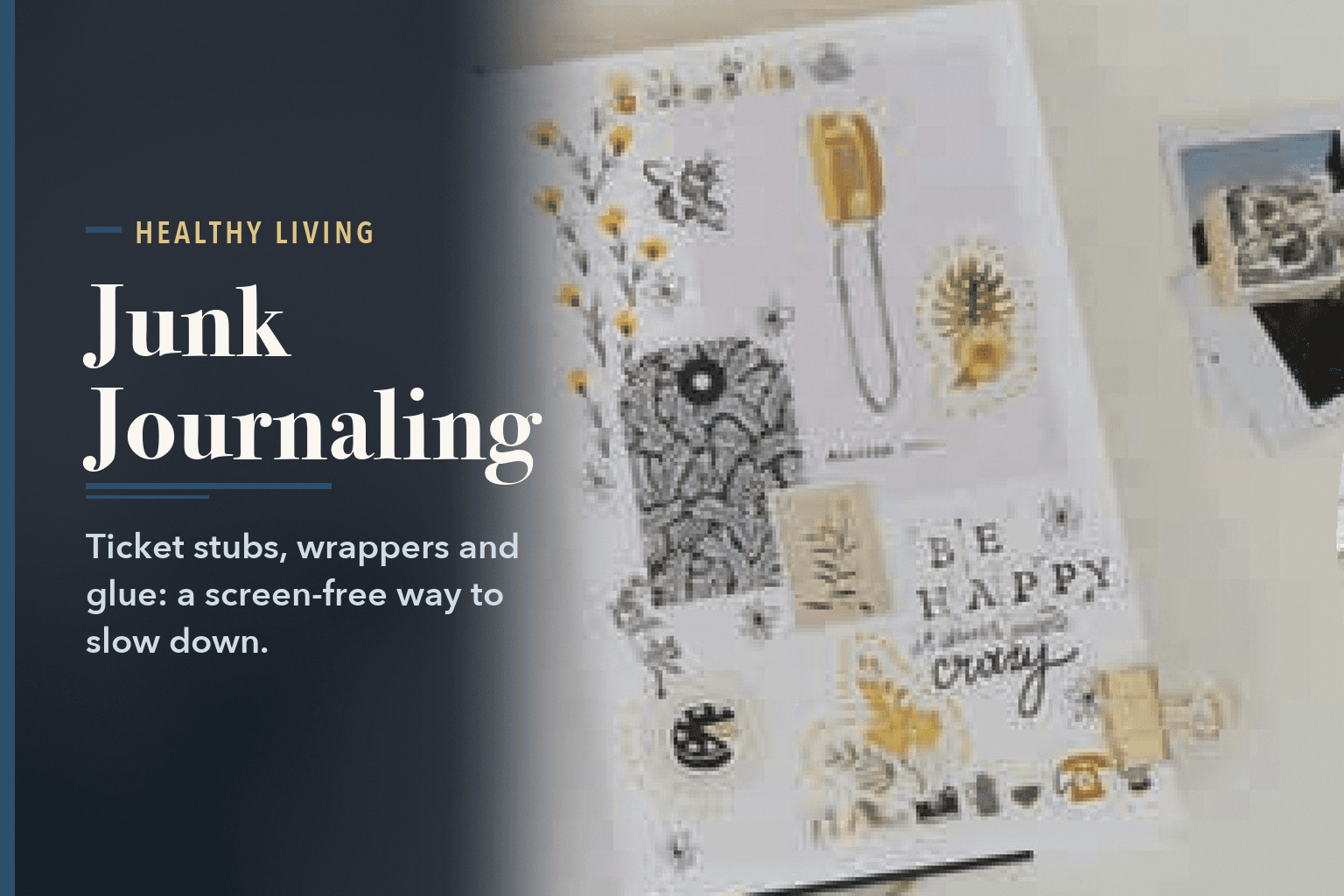
Thousands of people are gluing ticket stubs, tea bag wrappers and torn magazine pages into handmade books and calling it self-care.
Junk journaling turns everyday scraps into personal, tactile art. It borrows the nostalgic heart of scrapbooking and drops the rules, inviting imperfection and spontaneity in a way that trains the mind to be present. In a world starved for slowness, it is a creative outlet that needs no screen.
What a junk journal is
A junk journal is a place to fill and store repurposed, recycled or found materials that speak to you. The process is less about the finished page and more about the practice of filling and decorating it with postage stamps, candy wrappers, paper napkins, fabric scraps and other keepsakes. Layering and collage are welcome. No writing is required, unless you want to write. The emphasis is on materials that have already lived a previous life, valuing texture and nostalgia over polish.
Why it works
Traditional journaling can be intimidating. A blank page carries an expectation to produce something meaningful, and for many people that pressure is enough to close the book and never pick it up again.
Junk journaling removes the pressure. The focus shifts from what you are thinking and feeling to what you are making, and that shift creates room for reflection. You might find yourself processing something while arranging a collage without ever having to put it into words.
What you need
A journal can be as simple as a spiral notebook or legal pad, or as impressive as a leather-bound book. Then gather an adhesive (a glue stick for a simple look, washi tape for a more creative one), scissors, a pen or markers for doodles and captions, and your junk. Start with a small pile of collected items and see where it takes you.
The only rule is that there are no rules. The messiest pages often hold the most meaning.
This story appears in the September 2026 issue of Stroll Providence.