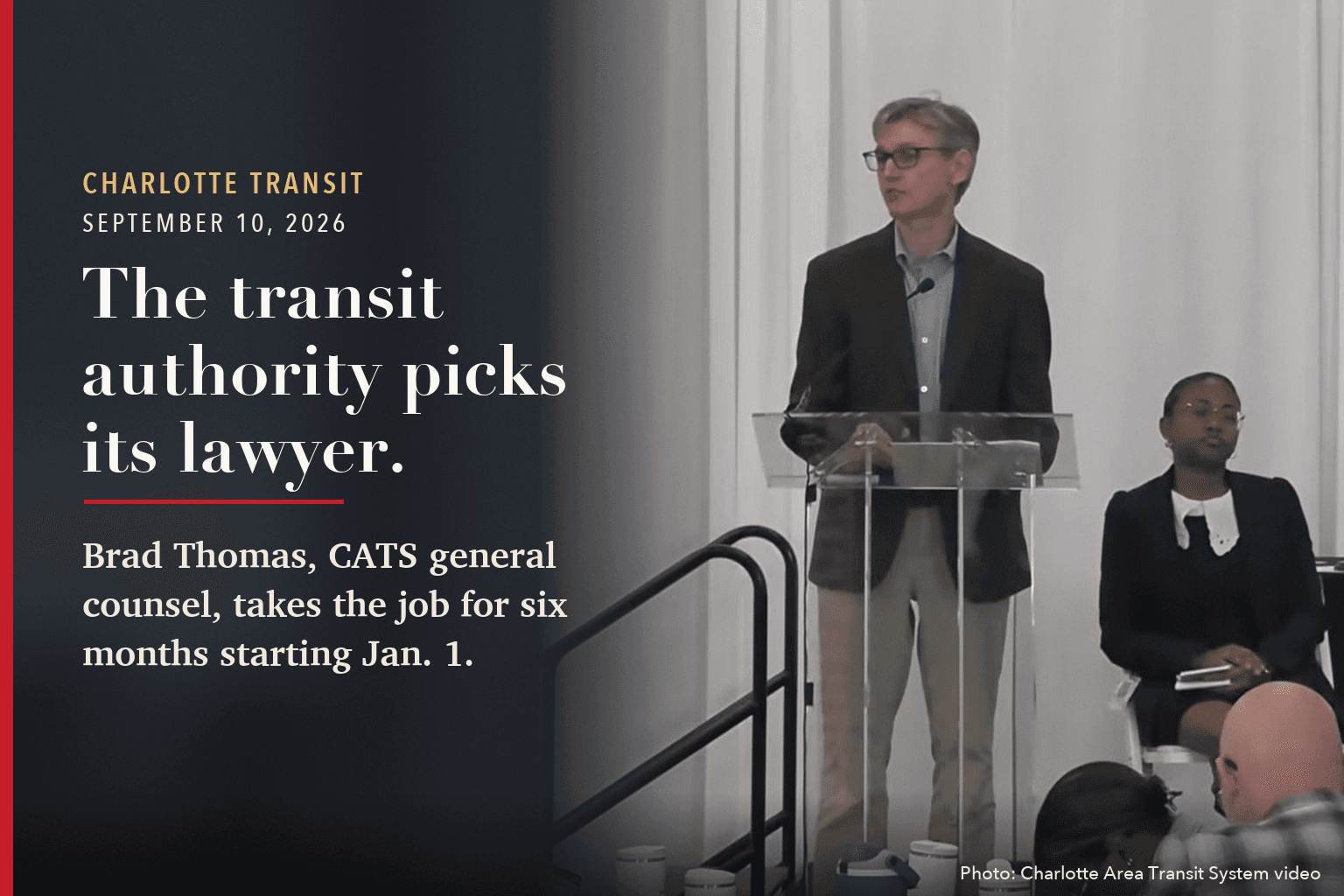
The Metropolitan Public Transportation Authority, the regional board that took control of Charlotte's buses and trains July 1, has named Brad Thomas, general counsel of the Charlotte Area Transit System, as its own top lawyer, or general counsel, starting Jan. 1 for six months.
That is the day the people who run CATS, still City of Charlotte employees, are scheduled to move to the authority.
The board voted unanimously Sept. 10, at the end of the first day of a two-day retreat, according to the meeting summary trustees approved Oct. 14. Vice Chair Frank Emory made the motion and Trustee Jocelyn Jones Nolley seconded it. The summary lists the item as the appointment of an interim general counsel and says Chair David L. Howard told the board it would reassess the position in April or May 2027.
Under the structure the board adopted in June, the chief executive and the general counsel are the two positions that report straight to the 27 trustees; the general counsel does not answer to the chief executive. Consultants told the board that arrangement keeps the authority's legal advice independent of its management. The other position is also interim: Brent Cagle was still interim chief executive at the board's Oct. 14 meeting, and the national search for a permanent CEO began in May.
The vote came minutes after a closed session held to consult the board's lawyers, set its position on an employment contract and consider personnel matters; the summary says no action was taken in closed session. The retreat agenda listed policy approvals and a closed session "if needed," but not the appointment. Sixteen trustees were still in the room, by the summary's record of arrivals and departures.
Thomas has advised trustees at their meetings this year. At the retreat he briefed them on federal changes to the program that sets goals on federally funded contracts for disadvantaged businesses.
Thomas is drafting a resolution that would give the general counsel the authority the chief executive already has to hire outside law firms for up to $500,000, so the authority can bring in legal help quickly in an emergency, the board's executive committee was told Sept. 28.
The summary does not say what the job pays or what the board will do when the six months end. The board next meets Nov. 4.